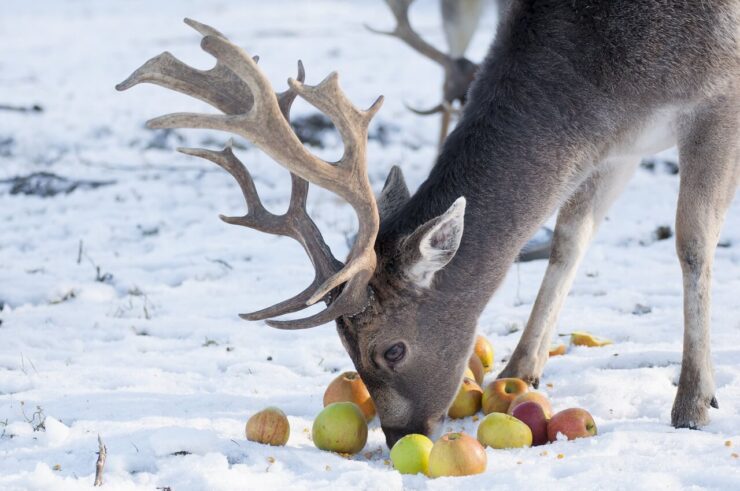
Deer eat a wide variety of plant foods, including leaves, shoots, twigs, nuts, crops, grasses, sedges, forbs, legumes, fruit, berries, grains, roots, and woody plants.
They are not simple grazers that feed only on grass.
Instead, they are selective feeders that search for high-quality, easy-to-digest foods and adjust their diet as seasons change.
So, what do deer naturally eat, which foods are best, and which foods should people avoid feeding them?
Do Deer Like Fruit?
| Fruit | Why Does it Attract Deer |
| Apples | Highly attractive when ripe or freshly fallen |
| Pears | Sweet seasonal fruit deer often eat after it drops |
| Persimmons | Strong fall attractant when soft and ripe |
| Blackberries | Summer soft mast deer browse when available |
| Raspberries | Seasonal berry food is eaten during warmer months |
| Mulberries | Attractive soft mast when trees are dropping fruit |
| Wild grapes | Natural soft mast found along vines and edges |
| Sumac fruit | Natural fruit clusters used in old fields and openings |
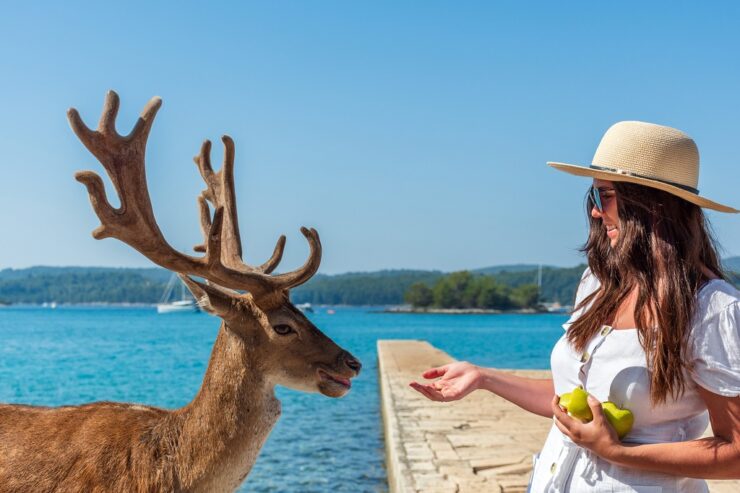
Deer like sweet, ripe, fallen fruit can pull deer into an area quickly, especially in late summer and fall when apples, pears, persimmons, grapes, and berries are available.
Ripe apples are often treated like deer candy.
Once apples start hitting the ground, hungry early-season deer may visit those trees often.
Pears and persimmons can work in a similar way, especially when they drop near bedding cover, field edges, trails, or timber openings.
Apples, pears, and persimmons rank among the top foods in many areas.
Blackberries, persimmons, wild grapes, and mulberries are common soft mast foods that deer eat during warmer months.
Sumac can also help feed deer, producing bunches of fuzzy red fruit and growing well in old fields, edges, and forest openings.
What Do Deer Naturally Eat?
Main deer food categories include browse, forbs, mast, crops, and seasonal woody foods:
| Browse | Forbs | Mast |
| Woody plants | Broadleaf plants | Nuts |
| Tender shoots | Weeds | Fruit |
| Twigs | Wildflowers | Acorns |
| Buds | Clover | Beechnuts |
| Leaves | Alfalfa | Berries |
| Saplings | Persimmons | |
| Shrubs | Apples | |
| Vines | Pears | |
| Wild grapes |
Seasonal woody foods also matter, especially during colder months.
Cedar, pine, maple buds, dogwood, viburnum, sumac, and birch can all become important food sources.
About 60% of a deer’s yearly diet can consist of browse, about 20% can consist of forbs, and a large share of the rest comes through mast and other seasonal foods.
Altogether, browse, forbs, and mast make up about 85% of a whitetail’s annual diet.
Deer also feed on grasses, sedges, leaves, shoots of trees, woody plants, fruit, berries, and sometimes tree bark when food is scarce.
Since deer can use hundreds of plant species, they adjust well to local food conditions.
Good habitat usually offers many food types at once rather than only one crop, fruit tree, or feed pile.
Best Foods Deer Like To Eat
Deer usually prefer tender, nutritious plants when available, then shift toward high-energy foods in fall and woody foods in winter.
Acorns and Other Hard Mast
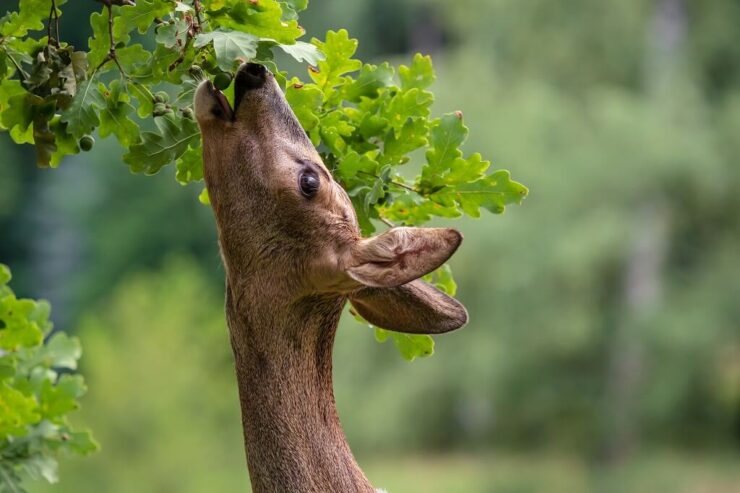
Acorns are one of the most important fall foods for deer. They are energy-dense, widely available in oak country, and help them build fat before winter.
When acorns are abundant, they may leave fields, orchards, and other food sources to focus heavily on oak areas.
Acorns can become a favorite whitetail food across several U.S. regions. At certain times, they may make up as much as 80% of a deer’s diet.
Another seasonal estimate places acorns at nearly 30% of a fall diet, helping deer gain fat before the rut and winter stress.
Beechnuts also matter where oak trees are limited or where acorn crops fail.
In areas with few oaks, poor acorn production, or strong competition for acorns, beechnuts can become a valuable hard mast food.
Browse – Leaves, Twigs, Buds, and Shrubs
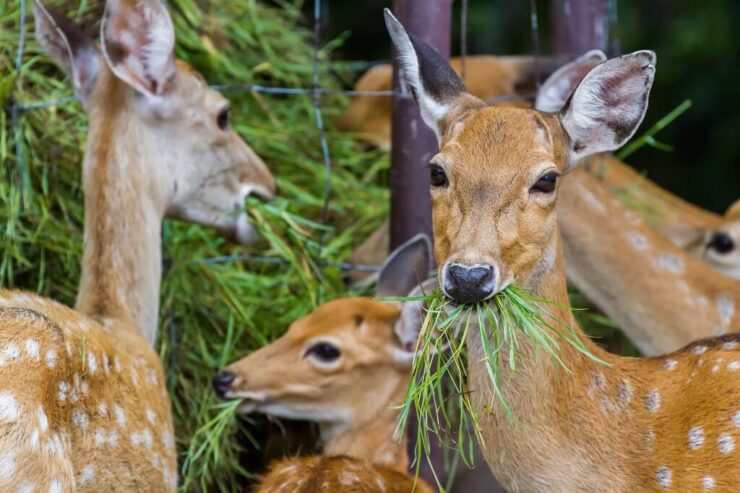
Browse is one of the most important food groups, especially across a full year.
It can account for about 60% of what deer eat annually.
During winter, browse often becomes even more important because many green plants die back or get buried under snow.
Good browse examples include:
- Maple
- Dogwood
- Viburnum
- Aspen
- Willow
- Greenbrier
- Honeysuckle
- Cedar
- White pine
- Yellow birch
- Sumac
Preferred woody foods include white cedar, white pine, maples, yellow birch, dogwoods, viburnums, and sumac.
Freshly dropped fall leaves can also attract deer, especially leaves of dogwood, aspen, and maple.
Fresh leaves may be preferred because they contain more moisture than older, dried leaves.
Forbs and Tender Green Plants
View this post on Instagram
Forbs include tender broadleaf plants, wildflowers, weeds, clover, alfalfa, and fresh spring growth.
Deer often seek these plants during spring and summer because they are digestible and nutrient-packed.
Tender spring and summer plants help deer recover after winter. They also support pregnant does, nursing does, growing fawns, and bucks developing antlers.
During summer, up to 70% of a whitetail’s diet can consist of forbs, including plants such as pokeweed, aster, ragweed, wild strawberry, and goldenrod.
Forbs can make up about 20% of a deer’s yearly diet. Important examples include wildflowers, weeds, soybeans, clover, alfalfa, and other tender crop or food plot plants.
Agricultural Crops
Crops can be highly attractive to deer, especially when fields border bedding cover, timber, brush, or travel routes.
Crops should not replace natural habitat variety, but they can add valuable seasonal food.
Common crops deer eat include:
- Soybeans
- Corn
- Cowpeas
- Oats
- Wheat
- Rye
- Milo
- Sorghum
- Alfalfa
- Clover
- Brassicas
Alfalfa can attract deer in spring, summer, and fall. Deer may even dig through snow to reach it during winter.
Clover is also highly attractive, especially in newly planted fields. Established clover plots can continue drawing deer for years when maintained well.
Cereal grains such as rye, wheat, and oats are especially attractive when shoots are young and tender.
Freshly cut cornfields can pull them quickly because waste grain becomes easy to find after harvest.
Fruit and Soft Mast
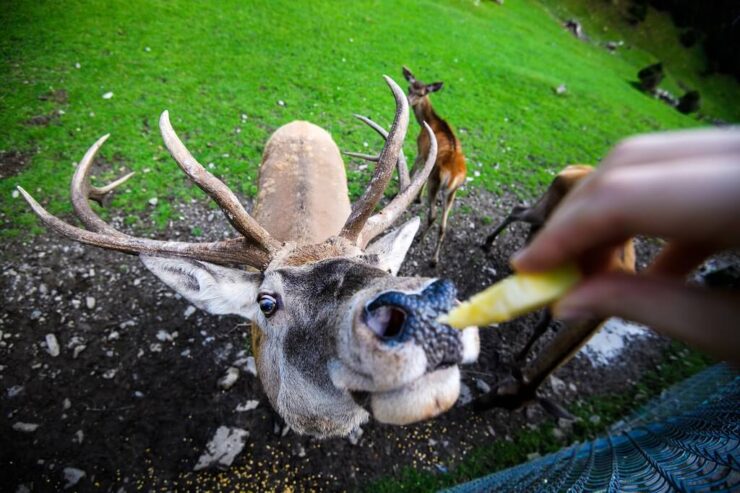
Fruit and soft mast can be very attractive when ripe or freshly fallen.
Apples, pears, persimmons, berries, grapes, mulberries, and sumac fruit can all bring them into feeding areas.
Soft mast includes fruits and berries such as blackberries, persimmons, and wild grapes, especially during summer. Mulberries can also draw deer when dropping heavily.
Orchards may attract deer even after fruit is gone because deer continue browsing on buds and twigs.
Sumac is another useful natural food source.
It grows in old fields, forest openings, and edges, and it produces red fruit clusters that can feed deer and other wildlife.
What You Shouldn’t Feed Deer
Deer may consume poor food when hungry, but that does not make it ideal.
Bad feeding choices can disrupt digestion, encourage crowding, increase conflict, or create unhealthy dependence.
Low-Quality or Starvation Foods
Some plants are eaten mostly when better food is unavailable.
Starvation foods can include spruce, beech, red pine, balsam fir, tag alder, and leatherleaf.
Spruce is eaten only as a last resort in some areas. Red pine has very little food value for deer. Foods like these should not be treated as ideal nutrition.
Heavy use of low-value plants may signal limited habitat quality or a lack of better seasonal food.
Large Amounts of Corn as a Sudden Diet Change
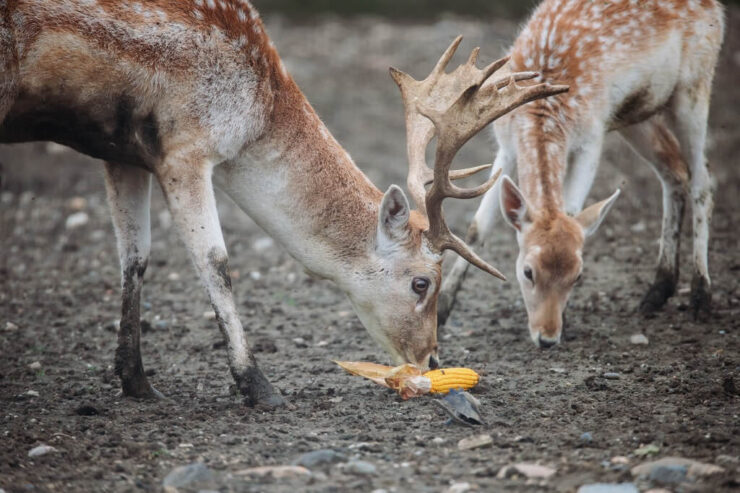
Deer like corn, and corn can attract them quickly. Freshly cut cornfields often draw deer because waste grain is easy to find after harvest.
Corn is energy-dense and attractive, but it is not a complete diet.
Large piles of corn given suddenly can be risky because they need a balanced, digestible diet. Their digestive system adjusts to seasonal foods over time.
A sudden heavy grain source can cause problems, especially during winter when deer are adapted to woody browse and other seasonal foods.
Corn should be treated as one attractive food, not a replacement for browse, forbs, mast, crops, and natural seasonal variety.
Processed Human Foods
Avoid feeding deer bread, crackers, chips, candy, cereal, pastries, salty snacks, and leftovers.
Processed human foods are not part of a natural deer diet and may disrupt digestion.
A healthy deer diet is plant-based and seasonal. Better food sources include grasses, sedges, woody browse, leaves, shoots, fruits, berries, nuts, crops, and mast.
Human snack foods do not match what they are built to eat.
Summary
Deer like fruit, especially apples, pears, persimmons, berries, wild grapes, mulberries, and sumac fruit.
Even so, fruit is only one part of a healthy diet.
Browse, forbs, mast, crops, and woody plants matter more across a full year.
Worst foods include processed human foods, spoiled foods, sudden piles of grain, and low-value starvation foods deer eat only when better options are limited.